ECITON-R comes from a few overlapping ideas: colonies that work without a single boss, teams where different pieces bring different strengths, and the belief that robotics can be serious without feeling sterile.
Ants: small actions, useful group behavior
An ant colony is not a miniature company with a manager ant assigning shifts. A worker responds to what it can sense nearby: food, nest conditions, a chemical trail, or a meeting with another ant. It takes the next small action it can justify from that local information.
That sounds almost too simple, but the effects stack. If enough workers find food and return successfully, the cues around that route can become more useful to other workers. More ants investigate; more successful trips reinforce the pattern. If a route stops paying off, those signals weaken and activity can move elsewhere. The group changes direction without anybody needing a full map or a master plan.
Here is what that looks like in an actual Argentine ant colony. The five circles are snapshots of the same arena over time: at first the ants are mostly clustered near the nest; then repeated local movement gradually leaves behind a branching trail network.
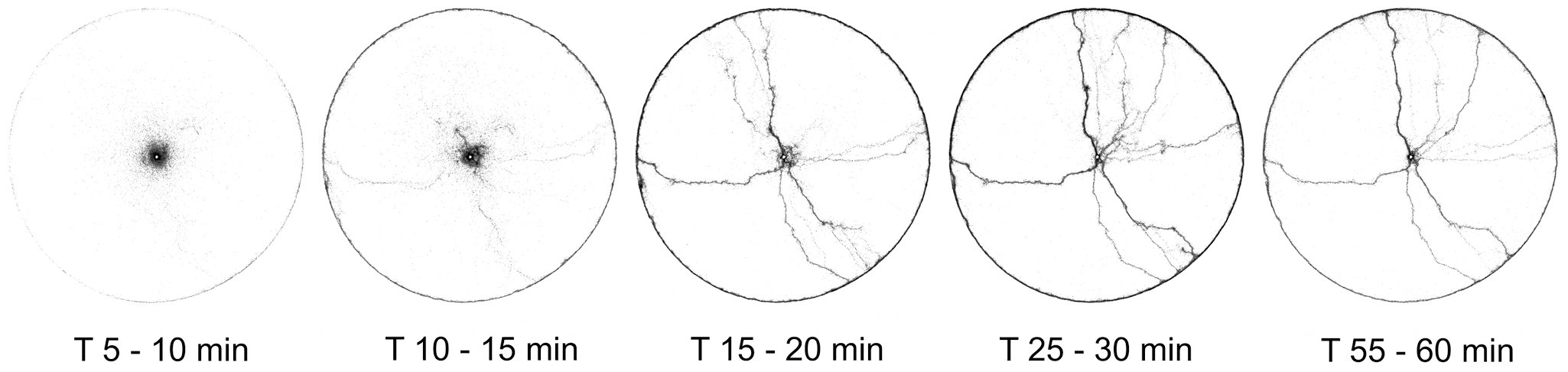 Five snapshots show an Argentine ant colony’s trails becoming visible over time, from 5 to 60 minutes.
A real colony’s trail pattern emerging over time. Darker paths show where more ants have travelled. Figure from Perna et al., PLOS Computational Biology, CC BY 4.0.
This is not one universal ant algorithm. Species differ. Some lay and follow chemical trails; red harvester ants, for example, regulate foraging through interactions in and around the nest rather than a trail to one food source. Colonies also have workers doing different jobs, and those jobs can shift with age, conditions, and what the colony needs. The real lesson is not “ants are perfect.” They are distributed, adaptable, and sometimes messy.
Watch and read
Read the research on collective regulation of foraging for more detail on how local interactions shape colony behavior.
Big Hero 6: the fun fiction
When I was a kid, I really enjoyed Big Hero 6. The robots were exciting, but the part that stayed with me was how the technology felt hopeful. Hiro is young, curious, and building things because he wants to see what is possible. That made engineering feel less like a distant subject and more like a way of making ideas real.
The microbots especially stuck with me. On their own, they are tiny pieces. Together, they lock into a shape and become a hand, a bridge, a wall, or something that can move a much larger object. Watching that happen makes a big idea easy to see: a group can do something that none of its individual members could do alone.
In the film, Hiro controls the microbots through a wearable neural transmitter, so this is not an ant-colony model or a real robotics blueprint. It is deliberately movie-sized and dramatic. But the visual is still interesting. Each piece needs to connect with others in the right place; the whole structure only works because many small parts contribute. That is the image that first made me curious about groups of robots and helped point me toward engineering.
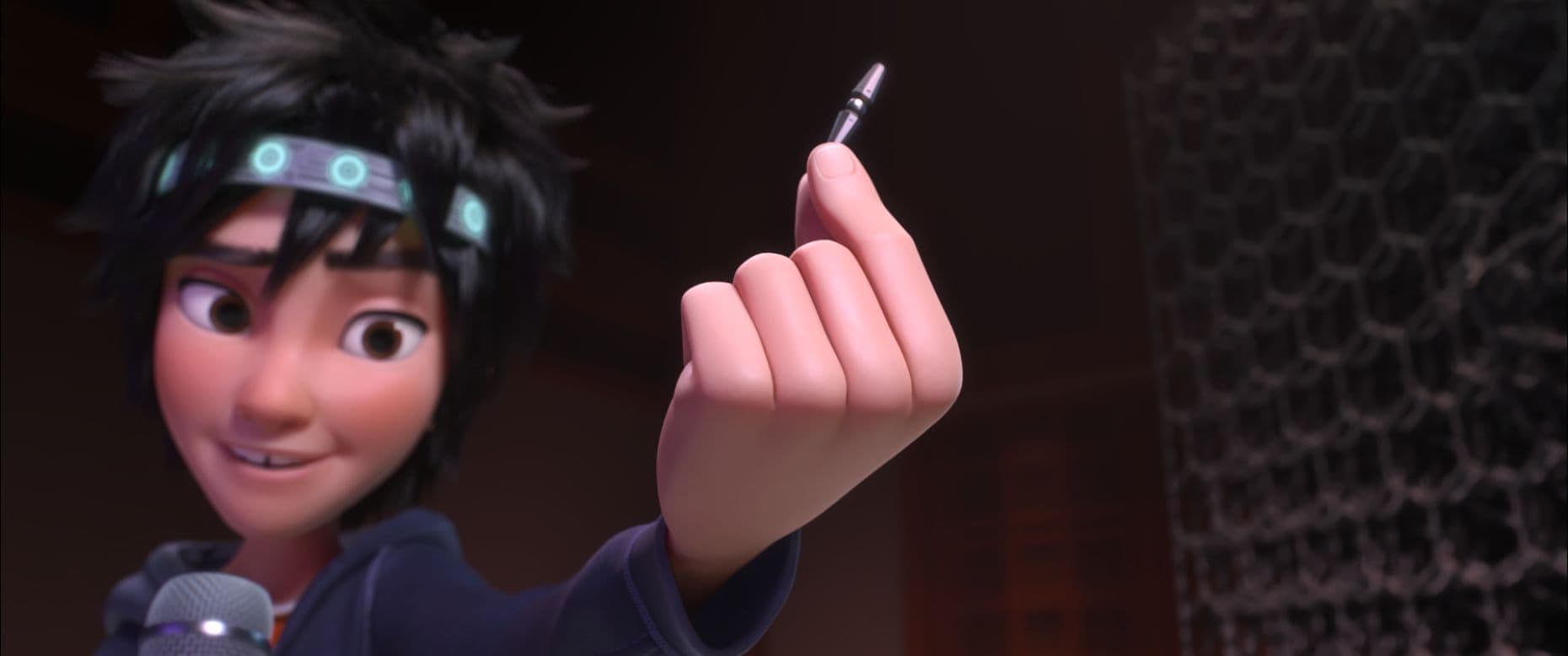 Hiro holds one fictional microbot beside a larger assembled microbot structure.
Film reference: a microbot and assembled microbot structure from Disney’s Big Hero 6. Included as fictional visual reference material. © Disney.
For the film’s premise, see Disney’s official trailer and this microbot artifact explainer.
What stayed with me
- From ants: local information can still lead to useful group behavior, and coordination should not collapse when one member or one route fails.
- From Big Hero 6: heterogeneous machines can feel like a team when their roles are clear, their interfaces are simple, and people can understand the group’s intent.
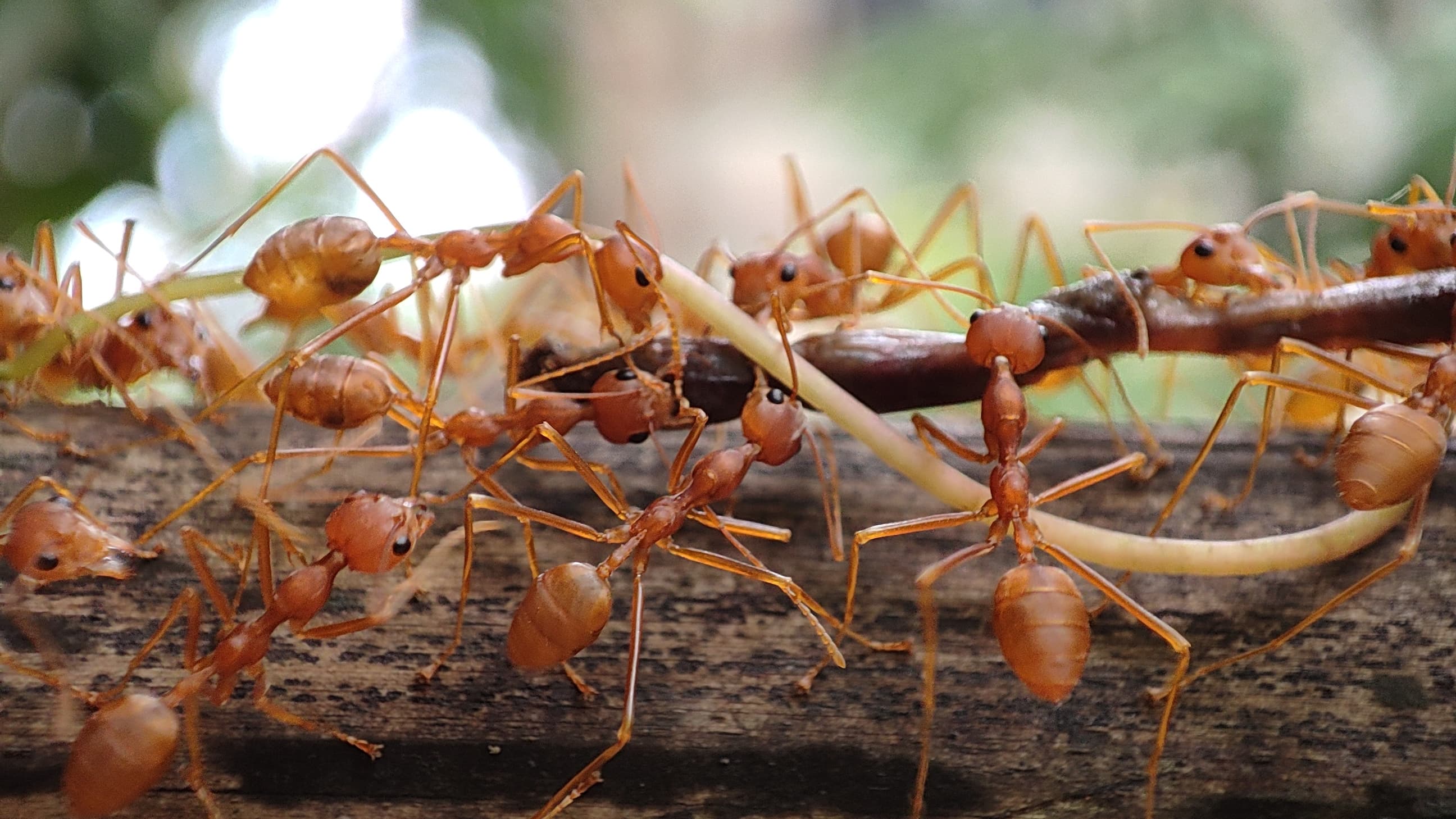
Photo: DKDEVS via Wikimedia Commons, CC0.
